

Nearly a million dollars in revenue. One day. One product. One funnel with YouTube ads.
That was Part 1 with Jairet Crum… and honestly, we were just getting started.
If you missed it, go back and read it first!
Because Part 2 is where things get real.
We’re talking about the compliance crackdown that almost destroyed YouTube ads advertising last year… Google introduced AI to its review process, and it overcorrected so hard that campaigns were getting shut down left and right.
Jairet shares the exact language shift that keeps ads running. Hint… it’s not about what you say. It’s about who’s saying it.
We also get into something I never thought about before… why YouTube ads might actually deliver higher AOVs than Meta. Not always. But more often than you’d expect.
And his approach to creative testing? Modular. Build hooks, bodies, and CTAs as separate pieces… snap them together… and suddenly you’ve got 20 ad variations without writing 20 ads.
Oh, and bridge pages? He skips them entirely. Straight to VSL. I asked him why and… yeah, it makes sense.
Stick around for the end, too. His advice for affiliates starting out isn’t what you’d expect. No tactics. No hacks. Just the truth about what it actually takes.
Listen to the episode on our Spotify channel
Or watch it on CPV channel on Youtube
Q: You mentioned Meta earlier. How does Meta traffic compare to YouTube in terms of quality for these offers, meaning traffic that gets you more conversions and leads?
Jairet Crum: Thanks for clarifying. Well, look, buyers exist on both platforms. I’m not going to say that one is any better than the other because I’ve had my biggest successes on YouTube.
One thing we’ve noticed is that YouTube ads can even have higher AOVs. It depends on the offer, it’s not every single time, but in general, I would say YouTube actually has higher AOVs. The people who are on YouTube typically spend more money. Conversion rates can be a little bit lower, but it’s not across the board.
Actually, I was just checking some data the other day, comparing Meta versus YouTube. I was looking at about five of our biggest offers. From what I remember, two of them had better conversion rates on YouTube, two of them had better conversion rates on Meta, two of them had better AOVs on Meta, and two of them had better AOVs on YouTube.
So it’s a little bit of a mixed bag. I wouldn’t say that either one has better traffic. I think it’s going to depend on the platform, the seasonality, and who you’re going after. But those buyers are on both platforms for sure. It depends on the product.
I’m trying to think of how to come up with a specific example. Maybe comparing e-commerce to direct response, there might be a difference. But with direct response offers, the buyers are on both platforms. That’s the main thesis.
Q: So they can both be successful if they’re done right?
Jairet Crum: Yes. The major difference I would say is algorithm sophistication on Meta, but it’s not traffic quality.
Think about Meta and the context of the platform, I talked earlier about this.
You’re there on Meta scrolling Facebook or Instagram, and you just want to be entertained. You’re almost mindless. It doesn’t have as much intent.
Facebook is able to engineer more signals into their algorithm through all of that behavior. You slowed your scroll. You stopped your scroll. You clicked a like. You clicked in to read the comments. All of those are signals tell Meta about what kind of content to show you, what kind of ads to show you.
But if we’re talking about in-stream YouTube ads, you clicked on a video and now they’re showing you an ad before you can watch your video. And there’s nothing you can do to interact with that.
You can’t like it because all of the information on the page is about the video you’re about to watch. You can pause it, and after five seconds you can skip it, that’s it. Or you can click to go to the landing page. So it’s a whole different context.

That’s why I say algorithm sophistication is better on Facebook. Maybe that’s good for retargeting or if you have a big, diverse group of ads. But it’s not about traffic quality.
Q: So it’s more about media buying tactics, which are different between the platforms?
Jairet Crum: If you get down into it, I’m sure there’s some way to take advantage of that. But it’s still a bit of a black box, all of what Meta really does. They’re trying to limit the actions that you take in the ad account. What they’re pushing us to do is create a greater variety, a more diverse variety of creative.
That’s what I mean about if you have a big enough variety of creative, the algorithm sees that you may have interacted with something and it shows you another ad from that brand, or it shows you a similar ad.
Or your ad gets shown to somebody because they were watching some influencer video about a doctor talking about heart problems, and now all of a sudden they’re showing them the blood pressure supplement. You didn’t click on anything, but you slowed your scroll, you watched a little bit.
On YouTube, you had to click in and you had to watch a video. There’s much higher intent. So it’s just different.
Because I’m not a media buyer myself, I can’t say exactly what tactical things you could pull from that. There might be some account-level tactical things you could do to take advantage of it. But I’m not sure.
Q: You were mentioning creatives, the creative types are different between the two platforms. How many creative variations do you test usually, or should be tested simultaneously per offer?
Jairet Crum: The way I think about it is in terms of concepts.
You want to go out with about three real, main, big concepts. Of course, it always starts with research, and then you lean into whatever those three most recurring concepts are, as a pain for the audience or a problem that they want to resolve. That’s how I think about it.
Then I would go with either 5 or 10 variations of each ad to roll out. It depends on how you think about it. If you want to do five different hooks and three different CTAs, that’s 15 different ads right there.
The way I think about ads is as modular components. You need to be able to write copy where your hooks, you can have five hooks, and all of those five hooks are going to transition into the body seamlessly. It’s not broken, it’s not distorted. Hook is one modular component, and the body is one modular component. You might have variations of that body copy as well that are modular components talking about different mechanisms. And then your CTAs, or your closes, if you want to use that language, are also modular components.
At a really high level, you could have more than that, but those are the three main pieces. I want to be able to say: “All right, I’m writing five hooks, I’m writing two different mechanisms for body copy, and I’ve got two different CTAs.”
That’s 20 different ads. Because I’m going to pair all five hooks with both of the bodies and both of the clothes.
And then I just throw those into a campaign and see what works.
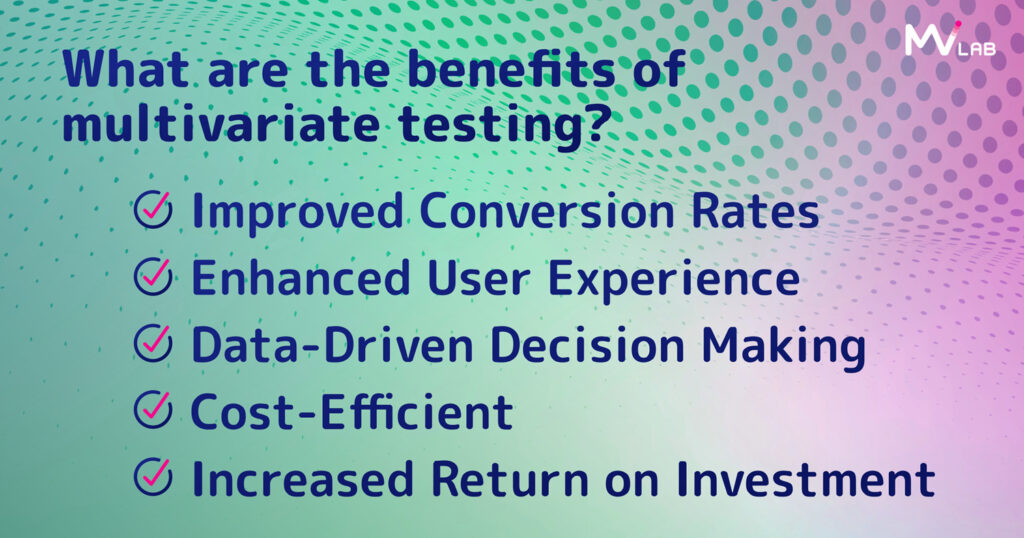
Q: So that’s multivariate testing for ads. We have a tool in our tracker that does multivariate testing for landing pages, rotating headlines and elements, then tracking which combination wins. And then to pair that with ad variants.
Jairet Crum: Yes, exactly, that’s how you have to approach it these days.
And it is perfect that you can pair them with the ad variants. So if I had those two different mechanisms, mechanism one would go to your landing page variants that align with that mechanism to maintain congruency, and then mechanism two would go to a different set of headlines?
Perfect, if the ad that triggered the visitor is tracked and you know which variation that visitor went to, and they’re paired together, that’s excellent. That’s the name of the game.
Q: Speaking of landing pages, do you use a bridge landing page or do you direct the visitor directly to the offer?
Jairet Crum: I don’t typically run bridge pages. I always try to send people straight to the VSL. We run straight to VSL.
This might go a little bit into compliance. Bots can scrape all this stuff now. If you’re using a bridge page because you think you’re hiding the VSL behind a page for compliance or something like that, no, not at all. They can definitely click through. So why use it at that point?
If you’re using a bridge page for your hop link or your affiliate link, that’s fine for the redirect, I get it.
But I think now most of the affiliate networks have direct links where the affiliate ID is hard-coded in, so you don’t have to go to a bridge page.
So we go straight to VSL: from the ad to the VSL and then to converting.
Product reveal below the VSL, usually add to cart, then go to the checkout flow, and then the upsell flow. That’s the format.
Q: What ad length converts best for direct response offers? Have you noticed anything specific, like 50-second bumper ads or 60-second videos?
Jairet Crum: A while ago, YouTube said they were going to start penalizing ads that are longer than three minutes. We never saw that to be true.
We talked to our reps, and they never saw anyone who was actually getting penalized. So I don’t know what that was actually about.
For a while, we were making sure we kept ads under three minutes. But I know that most of our ads are between two to five minutes, which is pretty long.
But again, it’s that educational aspect, you’re giving them a story, you’re talking about the discovery.
I’d say around three minutes is a great place to shoot for. It prepares them for the VSL that’s coming.

If they’re not going to sit through a five-minute video, why would you expect them to sit through a 40-minute video? They want to be entertained. To them, it’s like a movie.
Q: If someone does decide to use bridge pages, what advice would you give them?
Jairet Crum: As far as bridge pages, if you’re going to use them, just make sure you’re piquing curiosity and leveraging congruence to the ad unit.
You can’t be talking about some tropical thing in your ad and then they go to the bridge page and it talks about some coffee thing. You need to have that congruence, it has to be connected, talking about the same thing.
Your ad and your landing page must speak the same language, to talk about the same thing.
On a further note, if your bridge page is talking about a specific mechanism, like a liver detox or something, but your ad is talking about weight loss, that’s still incongruent. You want to make sure you’re using consistent language on the bridge page.
But the other thing is: don’t change your ad to match your bridge page. Your ad is your first contact. If you’re losing people on your bridge page, what can you learn from your ad?
If they’re clicking the ad and you’re losing them at the bridge page, adjust the bridge page. Pique curiosity, just pique curiosity enough to get the click. Be persuasive without being scammy.
Those are my main points. But if you can push straight to the VSL from the ad, that’s what I recommend.
Part 3: Compliance, UGC, and Final Advice
Q: What about ad compliance? You mentioned earlier that they’re strict. What should affiliates pay attention to?
Jairet Crum: For YouTube ads, last year was a really big year because around June there was a major compliance crackdown. Google introduced AI to their ad review process, and it kind of overcorrected; it got really strict. It’s not so bad now.
But the main things are to really avoid second-person language.
Don’t say “you will” or “you’re going to get.” Don’t say things like “you’re going to lose 30 pounds.” You can say “I lost 30 pounds.“ I always tell people to lean toward first-person language.
You also need to use a lens of what’s reasonable.
The FDA has rules about what’s reasonable. You can’t claim to lose more than about a pound a day or something like that. So if you’re saying “I lost 50 pounds overnight” that kind of stuff is going to get you shut down.
You have to find unique and creative ways to talk about big results without using specific time frames or making specific claims about results. Be realistic. And even if you want to go beyond being realistic, don’t go so exaggerated that it’s literally unbelievable.

If you’re stretching the truth a little bit, because you obviously want to get people’s attention, just find a way to say it that isn’t as direct as “you will lose 30 pounds in five days.” You just can’t be that direct. Focus on reasonable claims using first-person stories.
You can use AI to gut-check your claims. If you want to run your scripts through AI and ask questions from an FDA compliance perspective, or ask about claims regarding whatever health problem, whether they’re unbelievable or illegal, you can do that. But if you know how to navigate compliance, it’s really not an issue.
Q: Do you use AI to do those compliance checks, or do you just know the rules from experience?
Jairet Crum: Most of the time we know them from experience. But when we run into compliance problems, we have a compliance tool that we’ve built with AI and Google Developer Console. We built it ourselves to run scripts through AI and identify potential issues.
But we built this a while ago. Now I’m sure our writers just use Claude and ChatGPT because they’re just so good now.
But don’t expect AI to do everything for you. You need to pay attention and give a human touch to the copywriting. When I read something now, my first thought is whether it’s AI-generated or not, whether someone really thought about it or it just popped out.
If you’ve got a written script, you can have AI check it against FDA rules about specific topics, especially weight loss. Weight loss is a big one. Diabetes is a big one. You don’t want to say things you shouldn’t be saying. Using AI as your compliance reviewer is a smart move.
Q: Can affiliates starting out use UGC-style content for their video ads? Do you think that works?
Jairet Crum: Absolutely. If I was starting to run YouTube ads, and like I said, some of these affiliates who run on TikTok, I would just see how the ads perform as YouTube Shorts. Now in the Demand Gen landscape of Google’s ad campaigns, you can designate Shorts only and see how those ads run in Shorts placements.
Obviously TikTok videos aren’t the same as YouTube, but see how they perform in YouTube Shorts. If you have extensive experience scaling on TikTok, or even if you’re scaling on Meta with UGC, test them on Shorts and see how it goes.
We have some ads running on YouTube, street interview ads and some of that UGC-style native content that you see on TikTok or Instagram Reels. They can definitely work as YouTube ads.
So ads don’t have to be high production Honestly, I think it’s important to differentiate ads from VSLs. VSLs need to be more polished. But ads can actually be kind of scrappy. I think ads probably do best when they are a little bit scrappy. That’s why UGC works.
Especially because of what I said about first-person language, UGC tends to be first-person testimonial.
If you find authentic talent who can deliver the script, or a creator-type person who can deliver it in their own way really well, those are the kinds of things we already see on TikTok and Reels. And that’s going to work. It’s a slightly different audience, but it works.

Q: UGC-style content brings authenticity and credibility to the audience, right?
Jairet Crum: Absolutely. And anything that’s a longer-form piece of UGC-style content, like podcast-style content, you can chop those up into shorter pieces, or even fabricate them as fake podcasts. I guess that’s not technically UGC, but it kind of falls in that bucket because it’s still that type of content.
What do people call it now? CGC, Creator Generated Content. It’s not technically user-generated, but it’s still creator-generated. It’s similar. I think that kind of stuff all works. Definitely the first-person testimonial approach.
Q: First-person language is something I learned today. I never thought about having ads structured in first person. Can you explain why it works?
Jairet Crum: It’s natural to think that you want to speak to your audience directly.
But think about it, it’s almost like a recommendation. You say: “I did this thing. I had this problem.”
And the viewer is thinking: “I also have that problem.”
Then you’re saying, “And I was able to overcome it. I tried all these things that didn’t work.”
nobgblock
The more you write this way, the more they self-identify with your story. And it gets around compliance because you’re not saying things like: “Are you having this problem? Did you try all of these things and they failed? Do you feel miserable because of it? You should do this because you’re going to get results.”
Instead, you just talk about yourself, and the person self-identifies. They actually feel better about themselves in the process.
Q: Let’s wrap it up. What’s your top advice for somebody starting out promoting affiliate offers, like offers from ClickBank, especially if they want to start with YouTube?
Jairet Crum: My advice is a little more general, it’s about getting into the space with the right mindset rather than tactical advice on how to make sure you succeed.
I think the key is not betting your house on it.
What I mean by that is not spending everything you have on it. Make sure you’re willing to look at the first period, even your first year, or at least the first few months, as learning. Be willing to pay to learn. You’re putting money in, and you need to look at it as just learning the skills.
Make sure you’re not going broke on it as if you’re throwing all your money into crypto or something like that. Don’t bet your house on it. Don’t use your life savings. Make sure you’re still just testing and looking at it from a “pay for education” perspective. That’s really the way I look at it.

There’s a ton of free education out there. Make sure you’re going to YouTube and joining communities, including paid communities, to help accelerate your learning curve. That’s the kind of stuff that’s going to help you succeed because you’ll be learning from people who have already done it.
Just having a long enough time horizon to say “I’m committed to this” and understanding that it’s not a get-rich-quick scheme, that’s it.
Q: So think of it as building a future business, not just doing something temporary that you’ll leave. You learn, you build a business, and you create a lifestyle from it.
Jairet Crum: Exactly. The quicker you learn that it’s not about how fast you can make a million dollars, and it’s about the long-term vision, you can get to a million dollars, but you’re building a business, having a long-term time horizon helps a lot when you approach things.
Because you’re not thinking “I didn’t win today” and getting frustrated. You don’t want to give up. Think about what you learned today and how you can do better next time.
Q: Is there a problem you see in the performance marketing space that you’d like to see solved, or something you think could be done better?
Jairet Crum: Specifically for affiliates, the one thing I see some people starting to do, and it’s working and helping, is data visibility.
Typically in the past, an affiliate didn’t want to share their data. They didn’t want to share anything because it’s their competitive advantage. And I’m not saying you have to go tell other affiliates exactly what you’re doing.
But if you’re talking to your vendor and sharing that data back to them, what’s crushing it on ads for you could inform their next winning lead. That means more retained visitors on their VSL, which means more converted visitors on their VSL, which means either a higher CPA for you or higher scale for you.
Work with your vendor. Work in tandem with your vendor. Open up that data stream back and forth, because that’s what’s worked best for us.
I’m coming to you from the agency side where we work as partners with vendors, and what makes those relationships flourish is the fact that we’re in there side by side with them as partners.
If you start sharing data, I think it’s really going to help a lot on both sides, the affiliate side and the vendor side. Everybody wins when you do that.
Q: That’s a very interesting perspective. When we started CPV Lab as a self-hosted tool, it was mostly because affiliates were afraid of somebody stealing their winning campaigns. They wanted the tool hosted on their server, nobody touches the data, nobody has access. And now you’re saying sharing data with the vendor and creating partnerships is the way forward.
Jairet Crum: I totally agree that in this space, we’re in this together. If we share and help each other, it doesn’t mean I’m stealing from you. I’m sharing information, and maybe you have other ideas.
What’s the expression? Rising tides raise all boats.
If we can work together and think about it from a collaborative, abundant perspective instead of a closed-off, scarcity mindset, I think everybody wins.

Q: Where can people get in touch with you if they want to find out more about what you’re doing or follow you?
Jairet Crum: I’m not really big on social media. I think LinkedIn is probably where I’m most active, you can just search for my name there. And then you can email me at Jairet at triedandtruemedia.com. You can put that in the show notes and people can reach out to me anytime. Happy to help.
Good emails are good emails. Spam emails tend to come with good emails too.
- LinkedIn: https://www.linkedin.com/in/jairet-crum/
- Tried and True Media
- Email: jairet @ triedandtruemedia.com
CONCLUSION
So here’s the thing about Jairet…
He’s not trying to sell you on YouTube ads. He’s just telling you what works. And what doesn’t. And why most people give up before they figure out the difference.
The compliance stuff alone changed how I think about ad copy. First-person language. Reasonable claims. No direct promises. That’s not just about staying compliant… it’s about building trust. “
I lost 30 pounds” hits different than “you will lose 30 pounds.” One feels like a story. The other feels like a pitch.
And using AI to gut-check your scripts before you run them? Why wouldn’t you do that?
But honestly… the part that stuck with me most was his closing advice.
Don’t bet your house on it.
Treat your first few months… maybe your first year… as tuition. You’re paying to learn. And if you go in with that mindset, you won’t panic when a campaign flops. You’ll ask what you learned and move on.
That’s not sexy advice. But it’s the kind that actually works.
Here’s what to take away from Part 2…
YouTube ads can deliver higher AOVs than Meta… buyers are on both platforms, it just depends on the offer.
Build ads as modular pieces… hooks, body, CTAs… mix and match to create dozens of variations fast.
Aim for around 3 minutes on ads… if they won’t watch that, they won’t sit through a 40-minute VSL.
First-person language keeps you compliant and builds connection… “I did” not “you will.”
UGC works on YouTube… scrappy ads can win, but VSLs still need polish.
Share data with your vendors… rising tides raise all boats.
And think long-term… this isn’t a lottery ticket, it’s a business.
Now… if you’re running YouTube ads campaigns and flying blind on your data, that 2-day tracking delay Jairet mentioned in Part 1 is costing you money. You’re killing campaigns that are actually profitable. Or scaling ones that aren’t.
CPV Lab ad tracker gives you real-time visibility so you know what’s actually happening. Not what Google says is happening.
Start your 14-day free trial here!
See the whole interview on YouTube or on Spotify

Author: Julia Draghici
Julia is the CEO of CPV Lab and CPV One ad trackers. She has 15+ years experience in the software industry, from development to management. For more than 7 years she is helping marketers get the best out of their marketing campaigns by using a performant ad tracker. Passionate about entrepreneurship, business and performance marketing, Julia loves helping people!


