
A comprehensive guide to launching, optimizing, and scaling profitable TikTok ads campaigns
TikTok has evolved from a platform known for dance trends and viral challenges into one of the most powerful advertising channels for performance marketers.
With over a billion active users scrolling through their feeds daily, the opportunity to reach highly engaged audiences has never been greater.
But what works on Facebook or Google often falls flat on TikTok.
The platform operates by its own rules, and understanding those rules is the difference between burning through your budget and building a profitable traffic source.
In this guide, we’ll break down everything you need to know about running successful TikTok ad campaigns.
We’ve gathered insights from media buyers and agency owners featured in our Champions of Performance Marketing series, people who are actually generating thousands of sales daily and have tested these strategies with real budgets.
Whether you’re completely new to TikTok Advertising or looking to scale existing campaigns, you’ll find actionable tactics you can implement immediately.
Why TikTok Should Be in Your Traffic Mix
Let’s address the elephant in the room: with Facebook and Google dominating the paid media landscape for years, why should you invest time and money learning a new platform?
The answer comes down to three factors:
- cost efficiency
- algorithm strength
- audience engagement.
First, the economics.
TikTok’s CPMs and CPCs remain significantly lower than Meta’s saturated auction environment.
For media buyers testing new offers or working with tighter margins, this cost advantage can mean the difference between profitability and loss.
You can gather meaningful data without the hefty price tag that Facebook now demands.
Second, TikTok’s algorithm is remarkably good at finding your audience, sometimes better than platforms with decades more data.
The “For You Page” recommendation system that makes TikTok addictive for users also makes it powerful for advertisers. Once the algorithm understands what converts, it can scale your winners efficiently.
Kyle Kosteczka, senior business development manager at ClickBank and co-host of the Affiliated Podcast, has observed significant shifts in traffic source performance.
While Meta has emerged as a dominant traffic source for many offers, he notes the importance of diversification:
“Meta is probably one of the best places to start, namely because of the cost. You can learn a lot without spending a lot.” But he also emphasizes that savvy media buyers are constantly testing emerging platforms before they become overcrowded.
Andrei, a media buyer running cash-on-delivery campaigns across Europe and Latin America, puts it more directly:
“TikTok is the fastest way to get into traffic sources. It was the easiest one, the quickest one, and also the cheapest one compared to Facebook and Google.”
Understanding TikTok’s Unique Environment
Before diving into tactics, you need to understand what makes TikTok fundamentally different from other advertising platforms. This isn’t just about format differences; it’s about user psychology and content consumption patterns.
TikTok users are in discovery mode.
Unlike Facebook, where people primarily connect with friends and family, or Google, where they’re searching for specific information, TikTok users open the app to be entertained and surprised.
They’re open to new ideas, products, and experiences, but only if those things are presented in an engaging way.
The scroll behavior is relentless. Users swipe through content at incredible speed, making snap judgments about whether something deserves their attention.
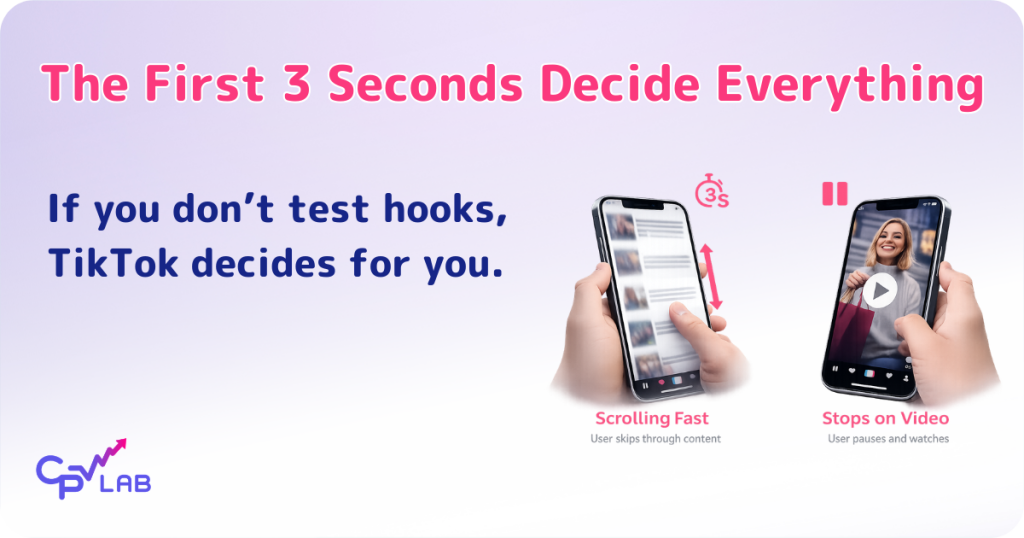
Research suggests you have roughly 1-3 seconds to hook someone before they move on. This is dramatically different from YouTube’s pre-roll format or even Facebook’s feed environment.
Authenticity isn’t optional; it’s required. TikTok’s audience has developed a finely tuned radar for content that feels “corporate” or overly produced. Ads that look like ads often underperform compared to content that feels native to the platform. This is why user-generated content (UGC)-style creative dominates performance on TikTok.
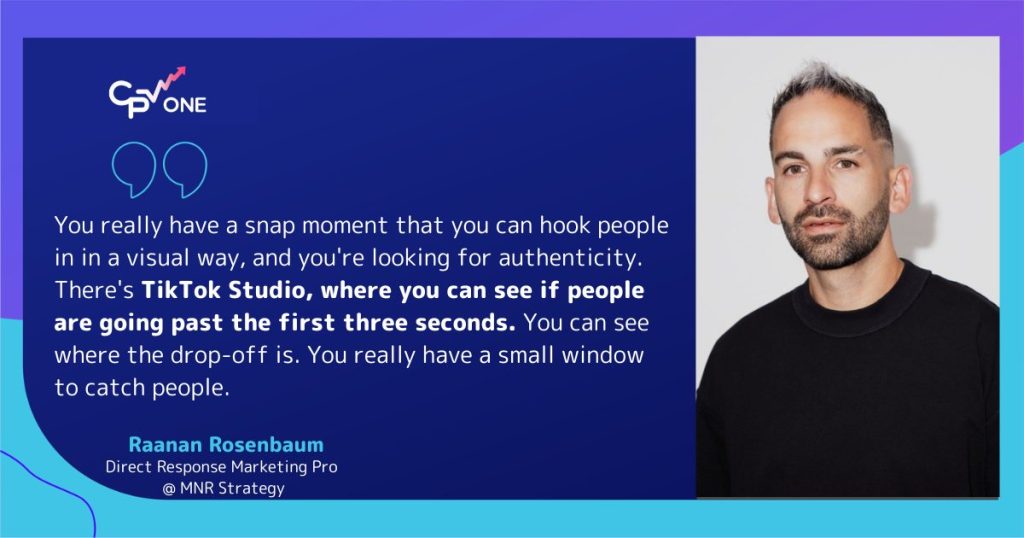
Raanan Rosenbaum, whose agency runs campaigns generating over 2,000 sales daily across multiple platforms, emphasizes this point:
“More than any other platform, TikTok authenticity is important. You have a very small window of time. People are looking to really be engaged in a few seconds.”
Creative Strategy: Mastering the Hook
If you take nothing else from this article, remember this: your TikTok ad’s success is determined in the first five seconds. Everything else, your offer, your landing page, your targeting, matters far less if you can’t stop the scroll.
The hook is everything.
It’s the visual, audio, or text element that makes someone pause their thumb mid-swipe and pay attention. Without a strong hook, even the best product with the most compelling offer will never get seen.
What makes an effective TikTok hook?
Pattern interrupts: Something unexpected that breaks the user’s autopilot scrolling. This could be an unusual visual, a surprising statement, or a movement that catches the eye. The key is doing something different from the organic content surrounding your ad.
Curiosity gaps: Opening with a question or incomplete statement that creates an itch to know more. “I can’t believe this actually worked…” or “Nobody talks about this, but…” These hooks leverage the brain’s natural desire for closure.
Immediate relevance: Calling out your target audience directly in the first second. “If you’re over 40 and struggling with…” or “POV: You just discovered…“. When viewers see themselves in the content immediately, they stick around.
Here’s a powerful insight from Andrei’s testing:
“The first five seconds on your video on TikTok make everything. I made a case study where I created a video of five seconds and just duplicated those five seconds to one minute. And the video scaled to almost 1,000 leads.”
This might sound crazy, but it illustrates a fundamental truth: if your hook is strong enough, the rest of the video’s job is simply not to lose the viewer. The hook does the heavy lifting; everything after supports it.
Content Production: Building Your Testing Machine
For TikTok advertising: you need a lot of creative content. Not just at launch, but continuously.
While a winning Facebook ad might run profitably for weeks or even months, TikTok creatives fatigue much faster. The platform’s users consume content voraciously, and they’ll quickly become blind to ads they’ve seen multiple times.
Top agencies produce thousands of short-form video variations monthly. Raanan’s team creates over 3,000 creatives per month across their campaigns. You don’t need to hit that volume immediately, but you do need a system for consistent creative production.
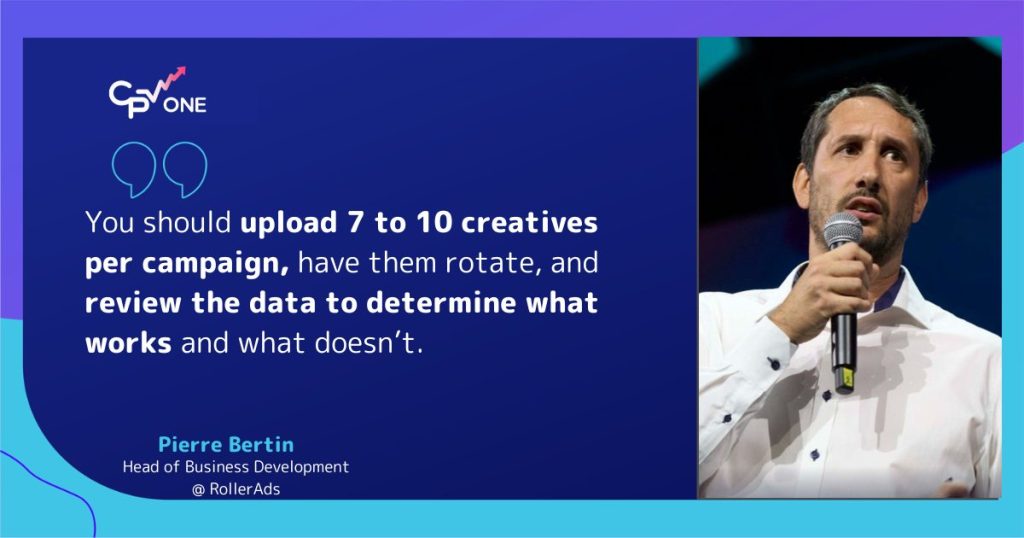
Pierre Bertin from RollerAds, who has worked across Google, TikTok, and Pinterest, emphasizes the importance of creative diversity: “You should upload 7 to 10 creatives per campaign, get them to rotate, and check the data to see what works and what doesn’t. Exclude the ones that don’t work. When something is working, try to replicate it, tweak it a little bit, maybe change the color or whatever, but keep the same thing, upload, and test again.”
The modular approach to creative production:
Rather than creating entirely new videos from scratch, think of your content in modular pieces: hooks, body content, and calls to action. A single body video can be paired with 10 different hooks to create 10 variations for testing. This approach lets you identify winning hooks efficiently without reinventing everything each time.
Step 1: Create your core content. Film or source the main body of your video, product demonstration, testimonial, explainer, or whatever format you’re testing. Keep this section relatively evergreen.
Step 2: Develop multiple hooks. Create 5-10 different opening sequences for each core video. Test different angles, statements, visuals, and approaches. This is where you’ll see the biggest performance variance.
Step 3: Vary your CTAs. Test different closing approaches: urgency-based, benefit-focused, curiosity-driven.
Step 4: Mix and match. Combine your hooks, body content, and CTAs in different configurations. One body video × 10 hooks × 3 CTAs = 30 variations to test, all from relatively limited production effort.
To manage this level of testing systematically, tools like CPV Lab‘s MVLab multivariate testing feature allow you to automatically rotate and test multiple creative elements, landing pages, and offers simultaneously, giving you statistical confidence in your winners without manual spreadsheet tracking.
Working with UGC Creators
User-generated content style dominates TikTok advertising performance.
Videos that look like they were shot by a real person sharing a genuine experience consistently outperform polished brand content. This creates both an opportunity and a challenge: you need access to authentic-feeling content at scale.
The biggest mistake brands make is chasing follower counts. A creator with 500,000 followers and 1% engagement will almost always underperform compared to a creator with 5,000 followers and 15% engagement. The metric that matters is whether their audience actually pays attention and takes action.
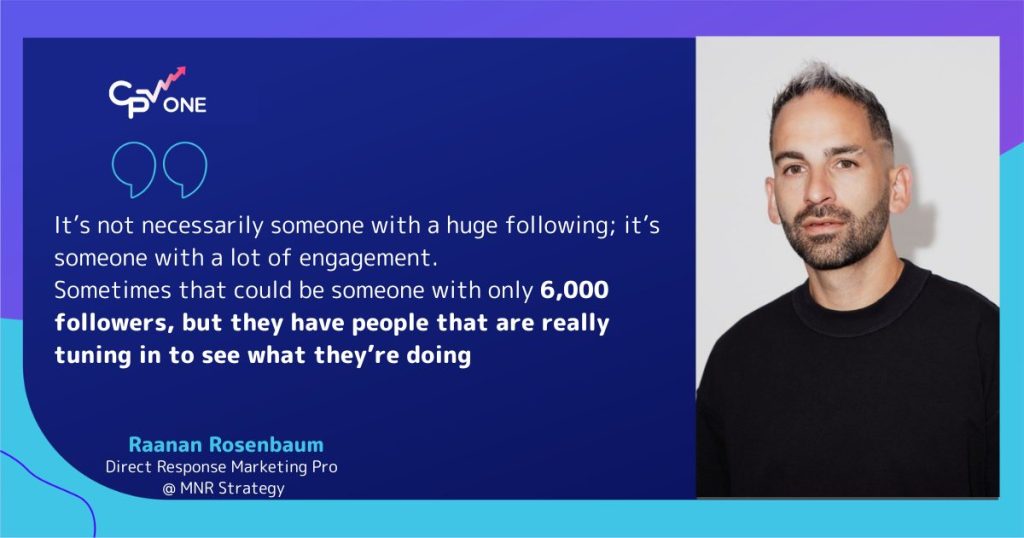
Raanan emphasizes engagement over reach: “It’s not necessarily someone with a huge following; it’s someone with a lot of engagement. Sometimes that could be someone who only has 6,000 followers, but they have people that are really tuning in.”
Start by researching competitors and similar brands in your space. Look at who’s creating content for them.
Most creators work with multiple brands, so talent that’s proven effective in your niche is often available. TikTok’s Creator Marketplace provides a searchable database, but organic discovery often yields better results.
TikTok vs. Facebook: Why Your Ads Need Different Approaches
One of the most common mistakes media buyers make when entering TikTok is repurposing their Facebook creative. While this seems efficient, it usually results in poor performance. The platforms require fundamentally different creative approaches.
Andrei explains the practical difference: “On TikTok, we focus on being quick and capturing attention.”
“On Facebook, we focus on storytelling to engage the audience and explain why they need your product. On TikTok, you just need to catch the attention, and the landing page will do the rest.”
This division of labor is crucial to understand.
On TikTok, the ad generates interest and clicks; the landing page handles persuasion and conversion. This means your landing pages need to work harder when traffic comes from TikTok; they must pick up where the brief ad left off and complete the sale.
Jitendra Vaswani, an affiliate marketer and SEO expert who runs his own agency, shares critical landing page optimization insights: “To optimize landing pages for conversion, the first and most important thing is that your landing pages should load very fast, no more than one or two seconds. If you have slow landing pages, you’ll lose a lot of money.”
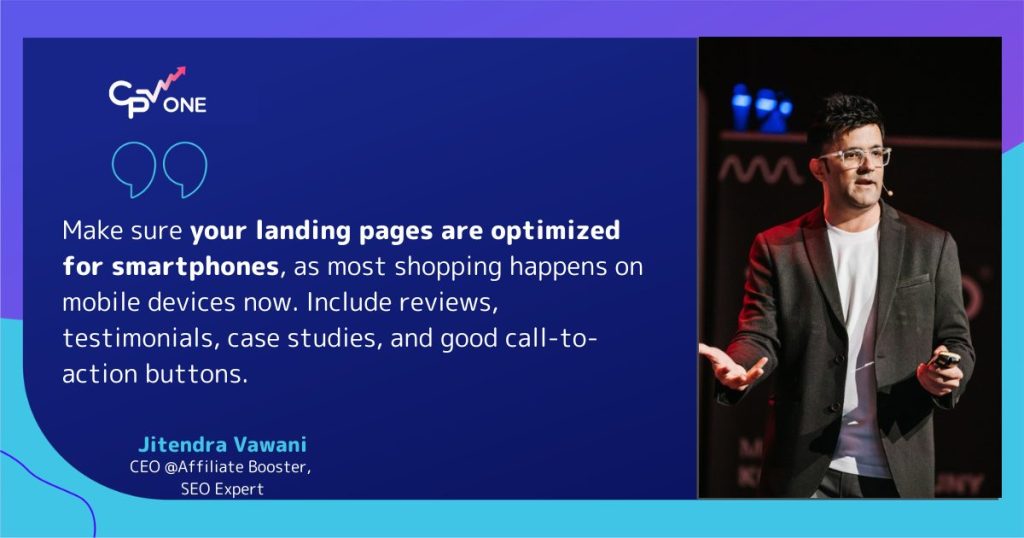
He adds: “Make sure your landing pages are optimized for smartphones, as most shopping happens on mobile devices now. Include reviews, testimonials, case studies, and good call-to-action buttons. The first layout of the landing page must solve the user’s problem and create curiosity to read further.”
Building Your Testing Framework
Success on TikTok, like any paid media platform, ultimately comes down to systematic testing. The affiliate media buyers consistently generating results aren’t lucky; they’re disciplined about testing hypotheses and letting data guide decisions.
Elnur Aliev, founder of Beard Media with eight years of experience running campaigns across Facebook, Google, TikTok, and native traffic, captures this mindset perfectly: “The magic is in the test. If you test enough, you will find what’s working. If you don’t test and you just try something and give up, you will never find a winning ad.”
Florin Simovici, CEO of Traffic Manager and organizer of Affiliate Expo, reinforces this approach from his 15 years in the industry: “At the end, it’s just trial and error. This is the way we’re performing in this industry, and I think in many other industries.”
What to test (in priority order):
1. Hooks: This is your highest-leverage testing variable. The same body content with different hooks can show 10x performance variance. Test hooks aggressively and continuously.
2. Angles: Beyond hooks, test different messaging angles. The same product can be positioned around convenience, results, price, exclusivity, or dozens of other angles.
3. Formats: Test UGC vs. product-focused content. Test talking head vs. text overlay. Test single presenter vs. duet format.
4. Landing pages: Once you have creative winners, test landing page variations.
Jitendra emphasizes systematic landing page testing:
“Always split test your landing pages. Create multiple versions and see what works; test different CTA button colors, for instance. We change elements like images, testimonials, and CTA buttons. We also test different offers, add videos, and modify headers and footers.”
Teodor Mincu, founder of MessengerOS, applies similar testing principles to email marketing that translate well to landing pages:
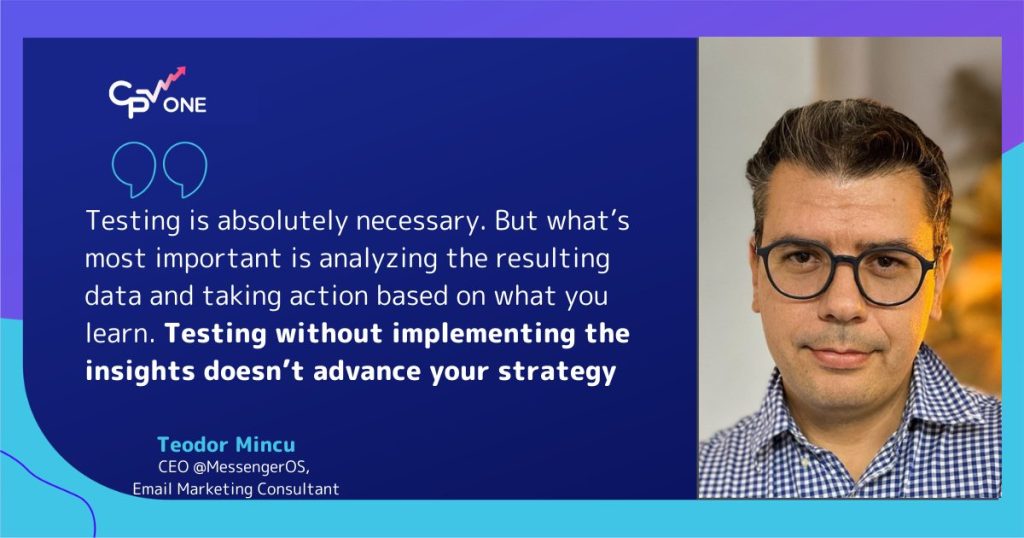
“Testing is necessary. It’s relatively easy to test different subject lines and content variations. But what’s most important is analyzing the resulting data and taking action based on what you learn. Testing without implementing the insights doesn’t advance your strategy.“
Parul Mehta Bhargava from VCommission adds an important perspective on testing philosophy: focus on long-term value, not just immediate metrics.
“Make sure that it’s converting for the brand. If it’s converting for the brand and they like your quality, they’re going to increase your payout eventually.”
Test for sustainable performance, not just quick wins.
Tracking: The Foundation Everything Else Depends On
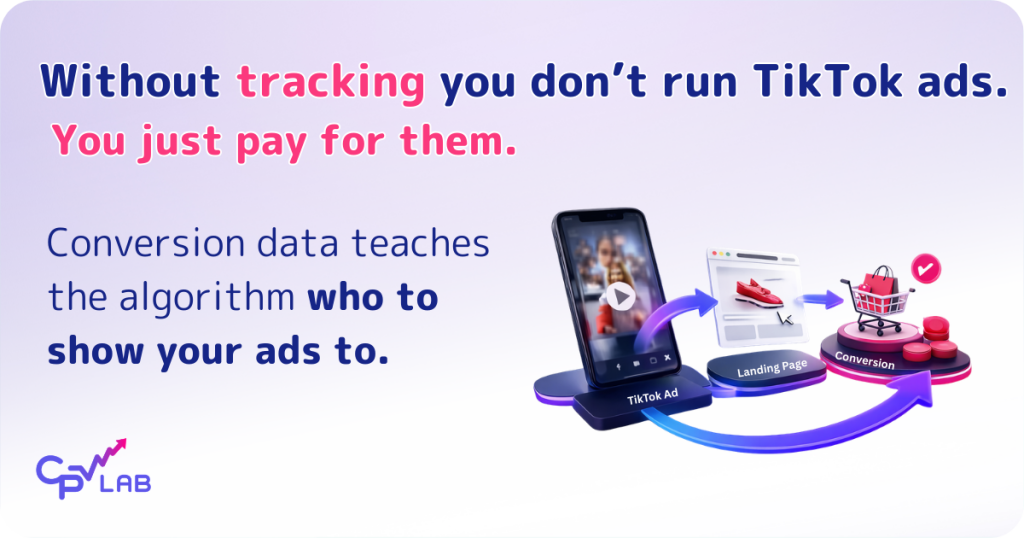
Without proper tracking, everything else in this article is useless.
You can’t optimize what you can’t measure, and you can’t scale what you can’t attribute. Tracking infrastructure should be your first priority, before you start spending on ads.
This isn’t just about knowing how many sales you got.
Modern tracking enables you to understand:
- which creative variations perform best,
- which audience segments convert at the highest rates,
- which landing pages produce the most revenue
- which parts of your funnel leak potential customers.
Andrei emphasizes tracking’s outsized importance on TikTok specifically:
“Tracking is the most important thing in TikTok. If you lose the first conversions, the first 20 conversions, your campaign will not perform as wellas it can.” The reason? Early conversion data shapes how TikTok optimizes your campaign delivery.
Tracking the visitors, landing page performance, costs and conversions and sending back conversions to TikTok Ad platform, is one of the most important thing you can do to optimize your campaign.
Elnur, with eight years of media buying experience, is equally emphatic:
“Tracking is everything. Without analytics, we cannot work; without tracking, it is impossible to make it in the affiliate space.“
Pierre Bertin from RollerAds explains why getting information about conversions matters for campaign optimization:
“For us and all ad networks, it’s crucial because that’s how we can help an advertiser or affiliate optimize their campaign. If the person running the campaign doesn’t set up tracking, we are blind and cannot help you.“
He adds: “Not setting up tracking is like buying traffic that you don’t know is going to perform or not.”
Stefan Muehlbauer, who has consulted on affiliate programs for 15 years through AffPal, frames the data question powerfully by quoting a fellow industry expert:
“You never lose money in media buying, you only buy data. It depends on how you use that data; if you don’t know how to use it, you’re just losing money.”
Jitendra reinforces the need for proper tools:
“Use proper tracking tools and affiliate links with sub IDs. For tracking, we’ve used CPV Lab and other tools. We use all these tools to optimize our campaigns.”
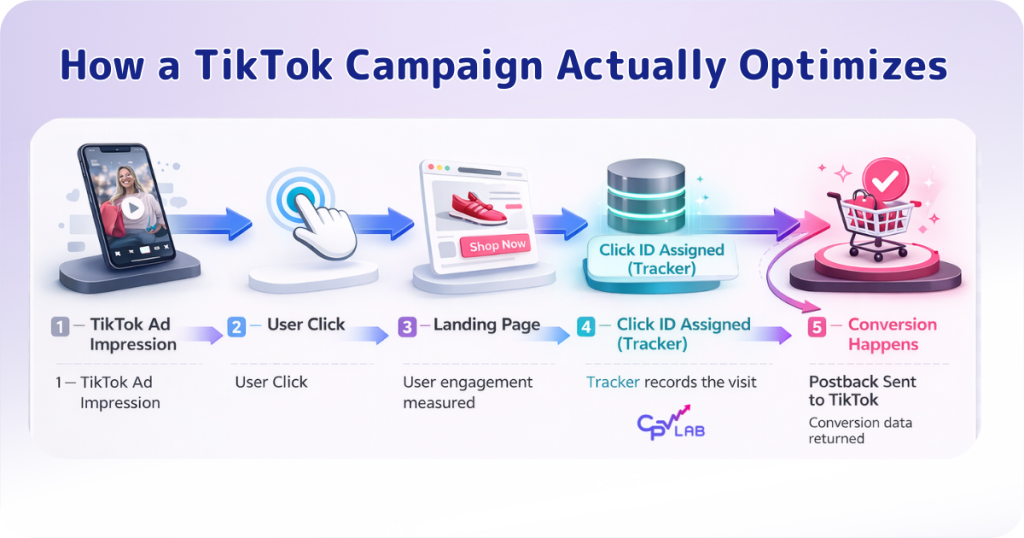
How CPV Lab Supports Your TikTok Campaigns
For media buyers running TikTok alongside other traffic sources, CPV Lab provides the tracking infrastructure that makes optimization possible. Rather than juggling multiple platforms and spreadsheets, you get a unified view of performance across all your campaigns.
TikTok API Integration: CPV Lab includes native TikTok Conversion API integration.
When conversions occur, the platform automatically sends event data to TikTok, ensuring the algorithm receives complete signals for optimization. This happens server-side, so it works regardless of browser privacy settings or cookie restrictions.
Multi-Source Attribution: Most media buyers don’t run TikTok in isolation; they’re also testing Facebook, Google, native, and other traffic sources. CPV Lab tracks all sources, showing exactly which platform, campaign, and creative drove each conversion.
Split Testing Capabilities: The platform’s rotation and split-testing features let you test landing pages and offers systematically. Send TikTok traffic to multiple landing page variations simultaneously, with automatic distribution and statistical tracking.
Real-Time Reporting: TikTok’s fast creative fatigue demands rapid optimization decisions. CPV Lab Pro’s real-time reporting shows performance as it happens, enabling you to pause underperformers and scale winners before wasting significant budget.
A third-party tracking platform like CPV Lab works as the measurement layer between your ads and your conversions.
Beginners use it to simply see which ads are making money.
Experienced media buyers use it to analyze funnels in detail, creatives, landing pages, devices, countries, and audience behavior.
Because the tracker assigns a unique click ID to each visitor, it can connect the TikTok click with the final conversion and send the event back to TikTok through postback tracking. This improves algorithm learning and helps campaigns stabilize faster.
Scaling Your TikTok Campaigns
Finding a winning campaign is only half the battle; the real money lies in scaling it profitably. But scaling too fast or without the right foundation leads to crashed campaigns and burned budgets.
Know your numbers before scaling
Before increasing spend, ensure you understand your unit economics completely.
What’s your target CPA?
What CPA allows you to remain profitable after accounting for refunds, chargebacks, and product costs?
Raanan emphasizes the danger of scaling without this clarity:
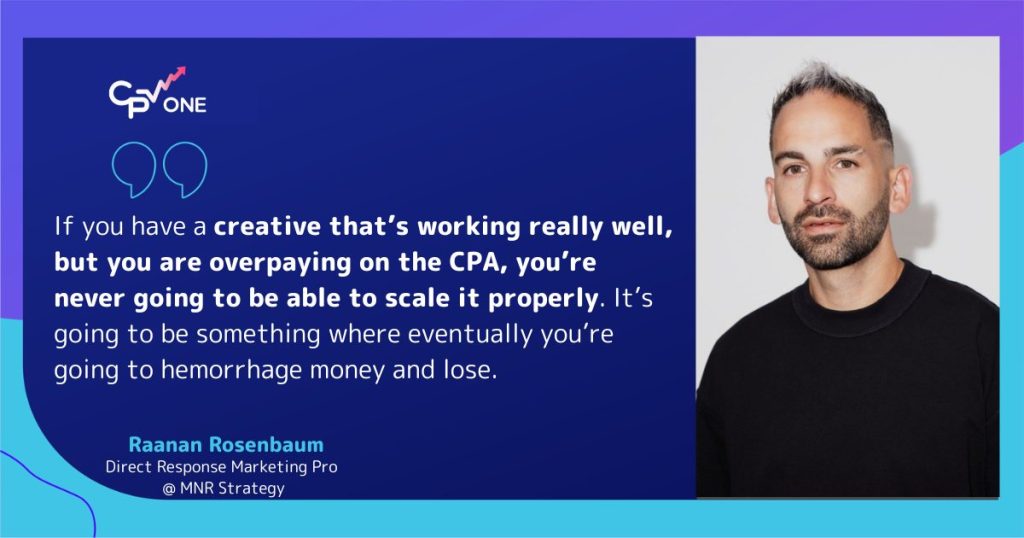
“If you have a creative that’s working really well, but you are overpaying on the CPA, you’re never going to be able to scale it properly. Eventually, you’re going to hemorrhage money and lose.”
Scaling methods
Gradual budget increases: The safest approach is increasing budgets by 20-30% every few days, giving the algorithm time to adjust.
Horizontal scaling: Rather than pushing more budget through a single campaign, duplicate winning campaigns and run them in parallel.
Creative expansion: Your winners will fatigue eventually. Prepare for scale by continuously developing new creative variations.
When you’re just starting with TikTok, resist the urge to spread yourself across too many platforms simultaneously. Raanan advises, “Try to really focus on one specific platform. Don’t divert into too many channels until you have a given track record on one.”
TikTok campaigns can also be analyzed deeply using tracking parameters. The tracker records campaign ID, ad group, creative, device, and location data. These tracking tokens allow you to see exactly which ad variation produced each conversion, not just which campaign. Instead of guessing what works, you can scale only the profitable combinations.
The TikTok Shops Opportunity
Beyond traditional TikTok advertising, TikTok Shops represent an emerging opportunity worth understanding.
This feature combines TikTok’s video format with integrated e-commerce functionality, allowing users to purchase products without leaving the app.
Raanan sees significant potential:
“TikTok Shops is like this beautiful creation of basically combining the video elements of TikTok through all different video creatives with kind of an Amazon checkout page. I’ve seen brands scale major money on TikTok Shops.”
TikTok Lives have become integral to TikTok Shops’ success.
Many brands achieving significant scale dedicate substantial resources to live selling, where presenters demonstrate products and interact with viewers in real time.
For affiliates with the capability to set up studio environments and manage live presentations, this represents a significant opportunity.
Common Mistakes to Avoid
Learning from others’ mistakes is cheaper than making them yourself.
Here are the most common pitfalls we’ve seen media buyers encounter on TikTok:
| Mistake | Why It Hurts Your Campaigns |
| Repurposing Facebook creative | Content created for Facebook’s slower, more narrative-driven environment typically underperforms on TikTok. Invest in platform-native creative from the start. |
| Launching without proper tracking | Skipping CAPI setup to “move faster” costs you in the long run. The algorithm needs accurate signals to optimize effectively. |
| Testing too few creative variations | A single creative rarely wins immediately. Plan for volume, and prepare multiple hooks, angles, and formats before launching. |
| Ignoring creative fatigue | TikTok audiences tire of ads faster than on other platforms. Monitor performance daily and have fresh creative ready. |
| Giving up too early | TikTok has a learning curve. Your first campaigns probably won’t be home runs. Commit to systematic testing and iteration before concluding the platform doesn’t work for your offer. |
Your TikTok Ads Action Plan
Ready to start running TikTok ads? Here’s a practical sequence to follow:
| Timeline | Key Actions |
| Week 1: Research & Setup | Spend time on TikTok daily, analyzing what makes you stop scrolling. Set up your TikTok Ads Manager account. Install the TikTok pixel on your landing pages. Configure the Conversion API through CPV Lab or CPV One (or directly if you have development skills) |
| Week 2: Creative Development | Develop at least 10-15 creative variations before launching. Focus on testing different hooks with similar body content. Source UGC creators if your offer benefits from that format. |
| Week 3: Launch & Learn | Launch your initial campaigns with modest budgets across your creative variations. Monitor performance daily. Identify which hooks generate the strongest response. |
| Week 4: Optimize & Iterate | Kill underperformers quickly. Increase budget gradually on winners. Develop new creative variations based on what you’ve learned. |
Why tracking matters specifically on TikTok
TikTok campaigns depend heavily on early conversion signals.
The platform’s algorithm studies the first conversions it receives and then tries to find similar users.
If conversions are not tracked correctly, TikTok optimizes toward clicks, not buyers.
That is why serious media buyers use a third-party ad tracker.
A tracking platform records:
- click data
- landing page behavior
- conversion events
- traffic source performance
and then sends the conversion data back to TikTok using postback tracking.
This process is called attribution tracking.
It allows you to:
- measure real ROI
- compare creatives
- identify profitable audiences
- scale winning campaigns safely
Without conversion tracking, TikTok advertising becomes guesswork.
With proper click tracking and server to serverattribution, TikTok becomes one of the most scalable traffic sources in performance marketing.
Frequently Asked Questions
How much budget do I need to start testing TikTok ads?
Plan for at least $500-$1,500 for initial testing. This allows you to test multiple creative variations and gather enough data for the algorithm to optimize. Starting with less often leads to inconclusive results. As Elnur notes, minimum budgets have evolved; what worked at $1,000 a few years ago now requires closer to $5,000 for meaningful testing in competitive niches.
How many creatives should I launch with?
Start with 10-15 creative variations minimum. Pierre Bertin recommends uploading 7-10 creatives per campaign to allow proper rotation and testing. Remember that most creatives won’t be winners; you’re looking for the few that outperform, so volume matters.
How quickly do TikTok ads fatigue compared to Facebook?
TikTok creatives typically fatigue 2-3x faster than Facebook ads. While a Facebook winner might run for weeks, expect TikTok creatives to decline within days to a week. This is why continuous creative production is essential;
Example: Raanan’s team produces over 3,000 creatives monthly to maintain performance.
Should I use TikTok’s Conversion API (CAPI)?
Yes, absolutely. CAPI is critical for accurate conversion tracking in the post-iOS 14 era. Andrei emphasizes that tracking is “the most important thing in TikTok.” Losing early conversion signals hurts your campaign optimization permanently. CPV Lab and CPV One offers native TikTok CAPI integration to simplify setup.
Can I use my Facebook ads on TikTok?
Generally, no. Facebook creative is designed for a different consumption pattern, longer storytelling and more polished production. TikTok requires authenticity and quick hooks.
On TikTok, you just need to catch the attention, and the landing page will do the rest.
What’s the ideal video length for TikTok ads?
For ads, 15-30 seconds typically performs best. The first 5 seconds are critical. Andrei’s case study showed that a 5-second hook duplicated to one minute generated nearly 1,000 leads. Focus your energy on the hook; if people don’t stop scrolling in the first few seconds, video length doesn’t matter.
How do I find good UGC creators?
Prioritize engagement over follower count. Raanan suggests looking for creators with high engagement rates: “Sometimes that could be someone that only has 6,000 followers, but they have people that are really tuning in.”
Check TikTok’s Creator Marketplace and UGC platforms like Billo and Insense, and research who creates content for competitors in your niche.
When should I scale my TikTok campaigns?
Only scale when you have consistent, profitable performance with known unit economics.
If you have a creative that’s working really well, but you are overpaying on the CPA, you’re never going to be able to scale it properly. Increase budgets gradually (20-30% every few days) and have fresh creatives ready for when winners fatigue.
Is TikTok good for B2B or only B2C?
TikTok is primarily a B2C platform, but B2B brands are finding success, especially in industries targeting younger decision-makers or creating educational content.
The platform works best for products with visual appeal and emotional hooks. Traditional B2B with long sales cycles may find better ROI on LinkedIn or Google.
What’s the biggest mistake new TikTok advertisers make?
Launching without proper tracking and giving up too early. Many advertisers skip CAPI setup, run a few creatives, see poor results, and conclude TikTok doesn’t work.
As Elnur says: “The magic is in the test. If you don’t test and you just try something and give up, you will never find a winning ad.” Commit to systematic testing with proper infrastructure.
Final Thoughts
TikTok advertising offers a genuine opportunity for media buyers willing to adapt their approach. The platform’s lower costs, engaged audiences, and powerful algorithm can deliver excellent results, but only if you respect its unique requirements.
Success requires embracing authenticity over polish, committing to high creative volume, and building solid tracking infrastructure from day one. The first five seconds of your creative will make or break your campaigns. Testing is non-negotiable.
The media buyers generating thousands of daily sales share common traits: they stay curious, test constantly, track obsessively, and never get comfortable with success. They treat setbacks as data rather than failures, and they’re always looking for the next winning angle.
TikTok isn’t going away; it’s only growing. The media buyers who invest in learning the platform now will have a significant advantage over those who wait.
Start testing, learning, and building your TikTok advertising capabilities today with CPV Lab.
Experts Featured in This Article:
Andrei – CSW Scale (CSWScale. com) – Media buying team and affiliate network specializing in cash-on-delivery campaigns
Raanan Rosenbaum – MNR Strategy – 17+ years in performance marketing, specializing in scaling brand-driven campaigns
Elnur Aliev – Beard Media – 8+ years running nutra VSL campaigns across multiple traffic sources
Kyle Kosteczka – ClickBank – Senior Business Development Manager with deep insights into affiliate success patterns
Parul Mehta Bhargava – CEO VCommission – Affiliate network expert specializing in quality traffic and brand partnerships
Stefan Muehlbauer – AffPal – 15+ years in affiliate program management and recruitment consulting
Florin Simovici – Traffic Manager – CEO with expertise in affiliate network technology and tracking platforms
Jitendra Vaswani – Affiliate Booster – SEO expert and affiliate marketer specializing in landing page optimization
Pierre Bertin – RollerAds – Head of Business Development, expert in push notification and alternative traffic sources
Teodor Mincu – MessengerOS – Email marketing platform founder and deliverability expert
Watch the full interviews on our Champions of Performance Marketing series on YouTube and listen on Spotify.
Related Articles and Videos:
• Raanan Rosenbaum: From Jewelry to Performance Marketing Success
https://youtu.be/GIB3CzLVZxQ?si=j9SrIZrxEreC10Qf
https://youtu.be/5gI60lDyBQ0?si=YydIo6_HdQp62q9v
https://www.youtube.com/watch?v=Lm_lFpKxsDc
• Kyle Kosteczka: From Accounting to Affiliate Marketing Success – Part 1
• Push Notification Advertising: Pierre Bertin’s Expert Guide
• Cash-on-Delivery Revolution: How Traffic Manager Powers 80% of European Affiliate Networks
• Why Attending Affiliate Networking Events Is Crucial for Affiliate Managers
• Jitendra Vaswani: The Future of Affiliate Marketing: Insights from SEO Expert Jitendra Vaswani


