TL;DR:
- Before looking at any metric, make sure your tracking is accurate. Wrong data leads to wrong decisions.
- CPC versus EPC, customer acquisition cost versus payout: Kyle keeps his metrics simple, and revenue and profit decide everything.
- A higher EPC does not always mean more revenue. Volume matters just as much as the rate.
- Whether to send traffic straight to a VSL or through a pre-lander depends on the channel. Big affiliates increasingly build their own custom pages.
- Payouts, unproven offers, commission scraping and poor support are the top frustrations affiliates have with networks.
- VSLs are converting less than before because traffic costs are up, deepfakes have raised the bar, and audiences want shorter content.
In Part 1, Kyle Dana, Director of Digital Strategy and Growth at Digistore24, walked us through his path from email list management to the network side, what separates successful affiliates from the rest, and which channels and verticals are working right now.
In Part 2 of this Champions of Performance Marketing episode, we get into the numbers. What metrics actually matter, whether email still works, VSLs versus pre-landers, what frustrates affiliates about networks, and why so many direct response brands are struggling right now.
Let’s get into it.
Listen to the episode on our Spotify channel
Or watch it on CPV channel on Youtube
Q: Does email marketing still work? Do you have numbers, or do you just see affiliates and vendors still promoting through email?
Kyle Dana: I still see it. It’s a lot harder, so there are fewer people having big success with email.
I think email is always very profitable, but let’s say on a vendor’s buyer list, in the past you might have been getting a dollar fifty per contact per month as a return. Maybe now that’s gone down 50%, maybe you get 75 cents.
You can still have success. You just need to work harder. You need to manage your deliverability more, do more of the best practices. So I’m still seeing a lot of vendors making money with their email list, and I still see some affiliates building lists. The return just isn’t what it used to be, and it takes more work. A lot of people are lazy, so they kind of abandon ship. But yes, you can still make it work. It won’t be as profitable as before, but there is still a lot of money in an email list.
Q: Do the vendors you work with handle their own paid ads and email, or do they leave paid traffic fully to affiliates?
Kyle Dana: A mix of both. Sometimes they do their own media buying and also work with affiliates, sometimes they work with an agency and affiliates, sometimes they fully use affiliates for paid ads. Every business is different.
Any vendor who’s having a lot of success is diversifying their traffic. Not just running Meta ads, because your ad account can get shut down, and there goes all of your traffic.
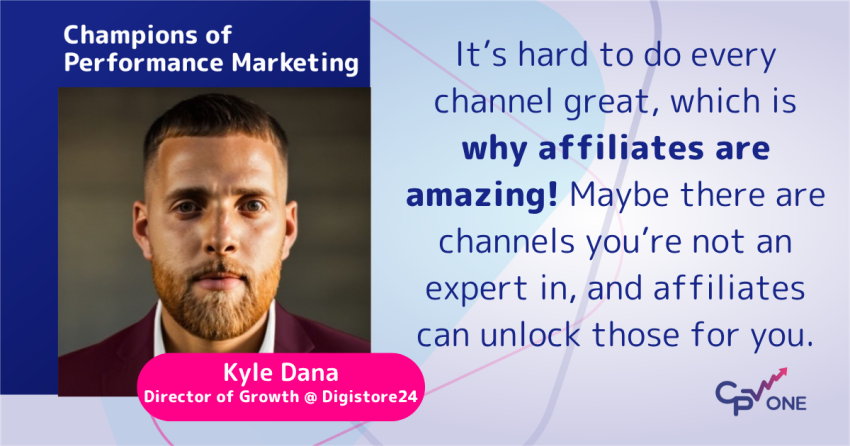
So the smart vendors do some of their own media buying and also use affiliates. It’s hard to do every channel great, which is why affiliates are amazing, because maybe there are channels you’re not an expert in, and affiliates can unlock those for you. It’s a win-win.
There are so many vendors I meet at events who say, “We’re doing 500 sales a day, we want to come to Digistore24 and scale.” Then a month later they say their ad account got shut down and they’re not making any sales anymore. I hear about it every week. So you want to be diversifying everything you do. You don’t want all your eggs in one basket.
Q: What metrics should affiliates pay attention to when tracking their campaigns?
Kyle Dana: Before I mention specific metrics, there are two big things.
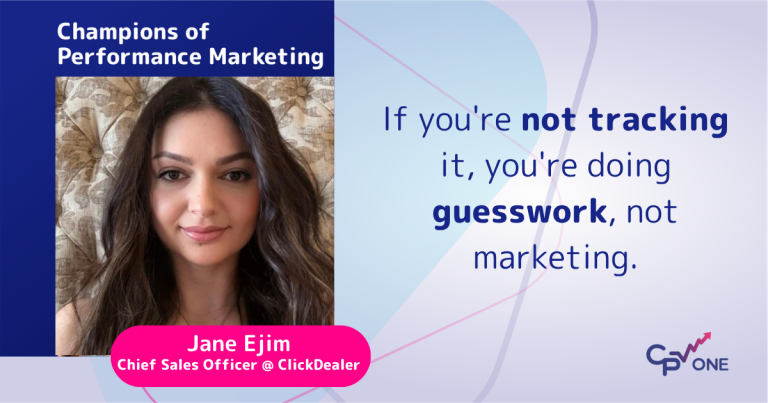
First, make sure you’re looking at accurate data. I’ve seen a lot of people whose tracking isn’t set up properly, and they’re not looking at the correct data, which is very dangerous if you’re making decisions off wrong data.
Second, have a nice mix of high-level macro data and specific micro metrics.
If I’m an affiliate, before anything, I want to know how the offer is converting. I want to know the payout I’m getting, whether it’s revshare or a fixed CPA.
For paid specifically, since a lot of affiliates are doing paid, I’d look first at whether my creatives are generating traffic at a good, efficient cost: click-through rate, CPM. Then what’s my CPC, my cost per click, versus my EPC, my earnings per click. What am I paying to get a click, and what am I earning per click.
I’d also look at my customer acquisition cost versus what I’m paid out. If my CAC is $50 and I get $100 per sale from the vendor, that’s a two-to-one ROAS right there. On the email side, it’s mostly the same, but there’s also RPM, revenue per thousand impressions.
Julia’s Take: Kyle’s point about accurate data comes up in almost every conversation on this podcast, whatever the topic. Jonathan Bouchard told us tracking is necessary because you can’t make decisions without data, it’s like flying blind. You can read that full conversation in Part 1 of my interview with Jonathan Bouchard. The metrics Kyle just listed, CPC, EPC, CAC and RPM, are exactly what CPV Lab and CPV One calculate automatically from your tracked clicks and conversions, so you don’t have to pull numbers from five different dashboards to compare them.
Q: Is EPC the most important metric to look at?
Kyle Dana: People used to die on the hill of EPC being the most important thing, and while it is important, here’s something I noticed doing email.
One offer or creative might have a two-dollar EPC, another might have a 90-cent EPC. You’d say the two-dollar one is twice as good.
But it could be that with the two-dollar EPC, you’re not getting a lot of clicks on that offer for whatever reason, versus maybe you had three times the clicks on the 90-cent EPC offer.
The 90-cent EPC actually made you more revenue than the two-dollar EPC, if that makes sense. So it’s about understanding how to look at the data and digest it, not just chasing the single highest rate.
For paid, those are the metrics I’d be looking at. I know some people overcomplicate this. For me it’s simple: CPC versus EPC, customer acquisition cost versus what I’m paid out, and at the end of the day, profitability, revenue and profit are the most important things.
Q: Do affiliates send traffic straight to the VSL, or do they use a pre-lander first?
Kyle Dana: It depends on the traffic channel. When I was doing email, I went directly to the VSL, and it converted well, so that’s what worked for me. If you’re doing paid, there are things to consider, like compliance.
Generally, we see a lot of the big affiliates having their own pre-landing page, whether it’s an advertorial or some other kind of bridge page before the VSL. So it depends on the channel, you see a mix of both, but a lot of the top big affiliates are either building their own custom page, or they have a relationship with the vendor and get custom pages built specifically for their audience and their traffic. That’s a big trend I see now.
Q: Digistore24 recently rolled out updates to its analytics tool. What problem were you trying to solve?
Kyle Dana: I have some insight on that. The big thing, which goes hand in hand with what I mentioned earlier, is that you can see your high-level numbers very quickly. You can open your dashboard, customize the numbers you see, and check in a few times a day to see the high-level numbers you want.
The big thing with our analytics is that it’s very robust. There are a lot of custom events you can create, so you can do a lot of customization and drill down into your analytics broken down by different factors. I haven’t used it a ton myself, but compared to a lot of other networks, it’s very robust, which is important.
We’re constantly trying to learn from our clients, there’s always going to be something we might be missing, so we’re always trying to make the platform better, easier to use and more robust. That’s always a work in progress.
Q: What are the common complaints you hear from affiliates about working with networks in general, not just Digistore24?
Kyle Dana: There are probably three or four main ones, and I can say that Digistore24 often works differently than a lot of traditional networks, or provides solutions to those problems.
One big thing is payouts. If you’re running directly with a vendor, or with smaller networks, you don’t always know when you’re going to get paid next. It’s not reliable, you can’t really count on it.
If you’re doing paid ads and you’re a big affiliate, cash flow is king. You always need money to reinvest in your campaigns.
At Digistore24, there are weekly payouts, and they’re always on time. There’s actually a funny story: when Digistore24 first started, we had a huge affiliate doing about $100,000 in ad spend a day, and he was texting directly with our CEO Francis, who was dealing with the bank to do manual payouts because the affiliate needed money right away to keep scaling.
Another one is products that aren’t proven, that aren’t necessarily high converting. It’s frustrating for an affiliate to send a lot of traffic and get few or no sales. Then there’s small networks that scrape some of your commissions, you brought 10 sales, but they say you made nine, and they don’t pay out fully. That’s a big complaint I hear about smaller networks.
And the last one is support. A lot of companies don’t even provide human support.
Before Digistore24 existed, I worked with a competing network for two years as an affiliate, doing quite big volume, and I didn’t even know I had an account manager. It took me going to an event and speaking with them to find out.
If you’re an affiliate doing millions, you should have an amazing account manager who is helping you, not just when there’s a problem, but helping you scale and succeed. Every hour you don’t have a solution is hurting your growth.

Q: You mentioned celebrating top affiliates and partners. Tell me about that.
Kyle Dana: It’s called Club 24. We’re actually planning our next one, in Cabo, Mexico.
It’s three days, you’re in paradise, but the biggest thing is you’re at a resort with two to three hundred of the most successful vendors and affiliates on the planet. You get a ton of ROI from events like that, because everyone shares knowledge.
We have top speakers, we do masterminds and networking. You learn a lot, but you’re also in paradise, doing cool experiences, beautiful dinners and parties. It’s definitely my favorite event of the year by far.
Q: Is it common for offers to change terms, get paused, or shut down while they’re live in the marketplace?
Kyle Dana: I don’t see that too much at Digistore24. I’ve seen it in the past, which was frustrating, one weekend I had campaigns scheduled and we were never told an offer had to be paused for compliance reasons, and we lost money that weekend.
At Digistore24, it’s very rare, maybe a couple of occasions a year. When it happens, we’re very proactive, we message every affiliate promoting that product and give alternative products that are similar.
It can happen because we don’t own the product, so you never know what the vendor might do, but it’s quite rare to see that.
Q: Do vendors typically provide creatives for affiliates, or just guidelines?
Kyle Dana: Generally, on their support page, they’ll provide creatives, whether for paid or email. I always caution affiliates not to always use those creatives exactly as they are, especially for email.
If other people have sent the same creative, it gets fingerprinted, the ISPs notice it and know others have complained about it, so even if it’s your first time sending it, it might land in spam. Use those creatives as inspiration or a reference, but I wouldn’t always use them exactly.
Generally they’ll provide creatives, and once you build a relationship with a vendor, they’ll often generate even more creatives for you as you scale.
Q: What about compliance? What mistakes do you see affiliates make that get them in trouble?
Kyle Dana: At Digistore24, we’re pretty strict from the start compared to some other networks. We don’t just let any vendor upload their product, everything has to get approved by our compliance team. So once you see an offer on Digistore24, it went through a pretty rigorous process.
For affiliates, we try to make sure we’re only working with ones who’ve been vetted. If we see an affiliate doing something they’re not supposed to, like branded search when they’re not allowed to, we deal with it, and if it means kicking them off the platform, we will. We want a clean ecosystem of good vendors and good affiliates. There are people in this industry who do sketchy things, but we work hard not to work with them.
Q: Have you seen cases where there’s a mismatch between the data the affiliate reports and what the vendor or network says?
Kyle Dana: In our case it’s pretty rare, because the tracking is usually set up well. I’ve seen times where tracking broke, and the nice thing is I’ve seen vendors take care of affiliates in that case, saying, on a thousand clicks, if this is normally what you get, we’ll manually pay you out because something broke on our end. But it’s rare to see that through Digistore24, because the tracking is quite accurate and the setup is generally done right.
I haven’t personally seen cases where a vendor claims a sale came from their own channel instead of the affiliate’s, that might be something my sales team deals with in terms of attribution, but I haven’t heard of it happening much. You probably know better than me, since you’re on the tracking side.
Julia’s Take: I have heard this from other networks, cases where a vendor is running their own Meta or Google ads alongside affiliate traffic, and there’s a dispute over which touchpoint actually gets credit for the sale. It comes down to attribution. If you want to understand the different models and how they affect who gets credit, we broke it down in Conversion attribution for performance marketers: which model should you use?
Q: A lot of direct response brands are having a hard time right now. Why do you think that is, and what should they do about it?
Kyle Dana: The biggest thing is that traffic is more expensive than ever. There’s a lot of competition because the barriers to entry are lower. Also, with AI, we’ve seen a lot of VSLs using deepfakes, and while that performs and converts very well, if you’re not doing that, it’s very hard to compete. Those affiliates get higher conversions and a higher AOV, so they can give a much bigger payout.
Traffic costs have risen, and VSLs in general aren’t converting like they used to. I think people now have an appetite for shorter form content. You have an hour-long VSL, but people are used to Instagram Reels and TikToks.
One more thing: a lot of VSLs target an older demographic, but someone who’s 70 in 2026 is very different from 10 years ago. My father is 73, and he’s not someone you’d look at and think of as old, he’s still playing sports, watching TikToks and Instagram Reels.
Older audiences before might have been more inclined to sit through a VSL, now it’s a bit different. VSLs aren’t dying out, but they’re not converting like they used to, so people are trying different funnels, maybe shorter form VSLs.
And then, of course, there’s telehealth and telemed now, people can access a doctor online, and there are different ways to lose weight than before. Weight loss, which was always the number one niche, isn’t anymore, which kind of makes sense given all that.
Q: How do you see the future of direct response marketing?
Kyle Dana: I wish I had a crystal ball. Things are changing a lot, like we just discussed with VSLs, so I don’t know exactly how things will change. The biggest thing is that people are going to have to test, adapt and try different things. Relationships are going to be more important than ever, if you’re an affiliate, having relationships with your vendors is going to matter a lot. I don’t know exactly how things will change, but they definitely will. I’m mostly just sitting here waiting to see what happens.
Q: What’s your top advice for someone starting out in affiliate marketing now?
Kyle Dana: I’ll give you two.
One, go to events, for two reasons. The relationships you can make at events are incredible. Especially in our industry, people like to work with people they know, like and trust. You could be in a room with 50 potential partners, so the amount of business you can get done in a couple of days is huge.
Also, going to masterminds, at Digistore24 we always host masterminds with top speakers from Google, from TikTok, big vendors and affiliates speaking. There’s so much you can learn. Even our top affiliates go to a mastermind and say the amount they learned is insane, because in a small room, people are willing to share things they wouldn’t share on a big conference stage.
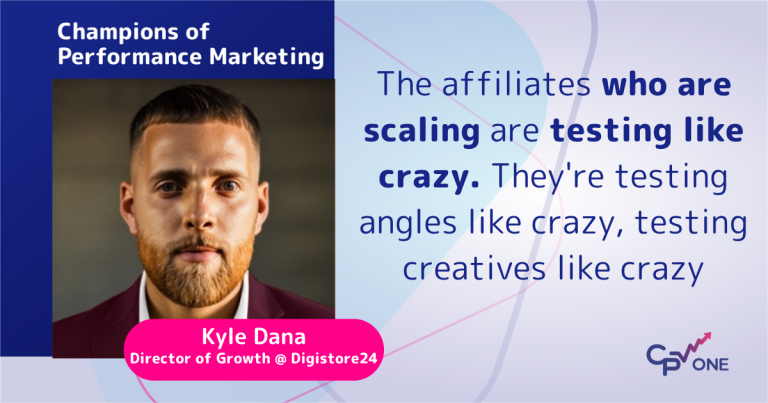
The second thing: not only test like crazy, but don’t give up. People give up so quickly, but there are times when you’re so close to a profitable campaign, and if you just adjust the angle or make one small change, that could unlock your profitability. Test, work hard. Your first funnel, your first campaign, probably isn’t going to be the one that brings you success. Keep at it. Eventually you will find success.
Q: Where can people get in touch with you?
Kyle Dana: Probably Instagram is the best place.
My handle is “the Kyle Dana.” I’m always sharing what Digistore24 is doing, especially around our events. I also use Telegram, same handle. If you’re interested in Digistore24, whether as a vendor or affiliate, or if you just want to connect, I love connecting with other people in our industry.
To follow Kyle and see what Digistore24 is doing with its events, find him on Instagram and Telegram: @thekyledana. You can also read his articles on the Digistore24 blog.
CONCLUSION
Two things from this second half of the conversation are still with me.
The first is Kyle’s point about EPC. It’s such an easy trap to fall into, looking at the highest rate and assuming it’s the best performer, when the offer with the lower rate might actually be making more money because of volume. It’s a good reminder that a single metric rarely tells the whole story.
The second is what he said about testing not being enough on its own. So many affiliates test, hit a wall, and quit right when one small adjustment to the angle could have unlocked a profitable campaign. That’s such a specific, human problem, and it has nothing to do with tools or channels.
Here’s what to take away from Part 2:
Accurate tracking comes before any metric. Wrong data leads to wrong decisions.
CPC versus EPC, and customer acquisition cost versus payout, are the numbers Kyle checks first. Profit decides everything.
A higher EPC doesn’t always mean more revenue. Check the volume behind the rate.
VSL versus pre-lander depends on the channel, and top affiliates increasingly build their own custom pages.
Payouts, unproven offers, commission scraping and weak support are what frustrate affiliates most about networks.
VSLs are converting less because of rising traffic costs, AI-driven deepfake competition, and audiences who want shorter content.
Go to events, and don’t give up. Your first campaign is rarely the one that works.
If there’s one thread running through both parts of this conversation with Kyle, it’s that the affiliates and vendors who win are the ones who actually look at their numbers instead of guessing. Whether that’s EPC versus CPC, or knowing which channel is really converting, it all starts with conversion tracking you can trust.
That is exactly what CPV Lab and CPV One are built for, real tracking across every offer and traffic source, so your decisions are based on data, not assumptions. If you promote Digistore24 offers, CPV One connects through a server-to-server postback so every sale is captured automatically. See the CPV One Digistore24 integration page for the setup.
Start your 14-day free trial here!
Missed Part 1? Catch up here to see what separates successful affiliates from the rest, and which channels and verticals are hot right now.
To follow Kyle, find him on Instagram and Telegram: [Kyle’s Instagram link] and [Kyle’s Telegram link]. You can also read his articles on the Digistore24 blog.
More episodes from Champions of Performance Marketing:
- Jonathan Bouchard on email lists and affiliate media buying (Part 1)
- Jonathan Bouchard on email marketing success (Part 2)
- Daniel Stanica on AI search visibility (Part 1)
See the whole interview on YouTube or on Spotify.
FAQ
What metrics should affiliates track in their campaigns? Kyle Dana recommends starting with accurate tracking data, then looking at CPC (cost per click) versus EPC (earnings per click), customer acquisition cost versus payout, and click-through rate. For email, RPM (revenue per thousand impressions) is also useful. Ultimately, profitability and total revenue matter most.
Is a higher EPC always better? No. An offer with a higher EPC but low click volume can generate less total revenue than an offer with a lower EPC but much higher volume. Affiliates should look at total revenue generated, not just the rate per click.
Should affiliates send traffic directly to a VSL or use a pre-lander first? It depends on the traffic channel. Email traffic often converts well going straight to the VSL, while paid traffic frequently benefits from a pre-lander or advertorial first, partly for compliance reasons. Many top affiliates build custom pre-landing pages tailored to their specific audience and traffic source.
What frustrates affiliates most about working with affiliate networks? Common frustrations include unreliable or delayed payouts, unproven offers that don’t convert, some smaller networks under-reporting commissions, and a lack of real account manager support, especially for affiliates generating significant volume.
Why are VSLs converting less than they used to? Rising traffic costs, increased competition from AI-generated deepfake content that converts at a higher rate, and shifting audience preferences toward shorter-form content are all contributing to declining VSL performance. Many affiliates are testing shorter VSL formats as a result.
How can I track Digistore24 conversions accurately? CPV Lab and CPV One integrate with Digistore24 through a server-to-server postback, which records each sale automatically and in real time. This removes the need for manual cross-referencing between your Digistore24 dashboard and your own reporting. See the CPV One Digistore24 integration page for setup steps.

Author: Julia Draghici
Julia is the CEO of CPV Lab and CPV One ad trackers. She has 15+ years experience in the software industry, from development to management. For more than 8 years she is helping marketers get the best out of their marketing campaigns by using a performant ad tracker. Passionate about entrepreneurship, business and performance marketing, Julia loves helping people!